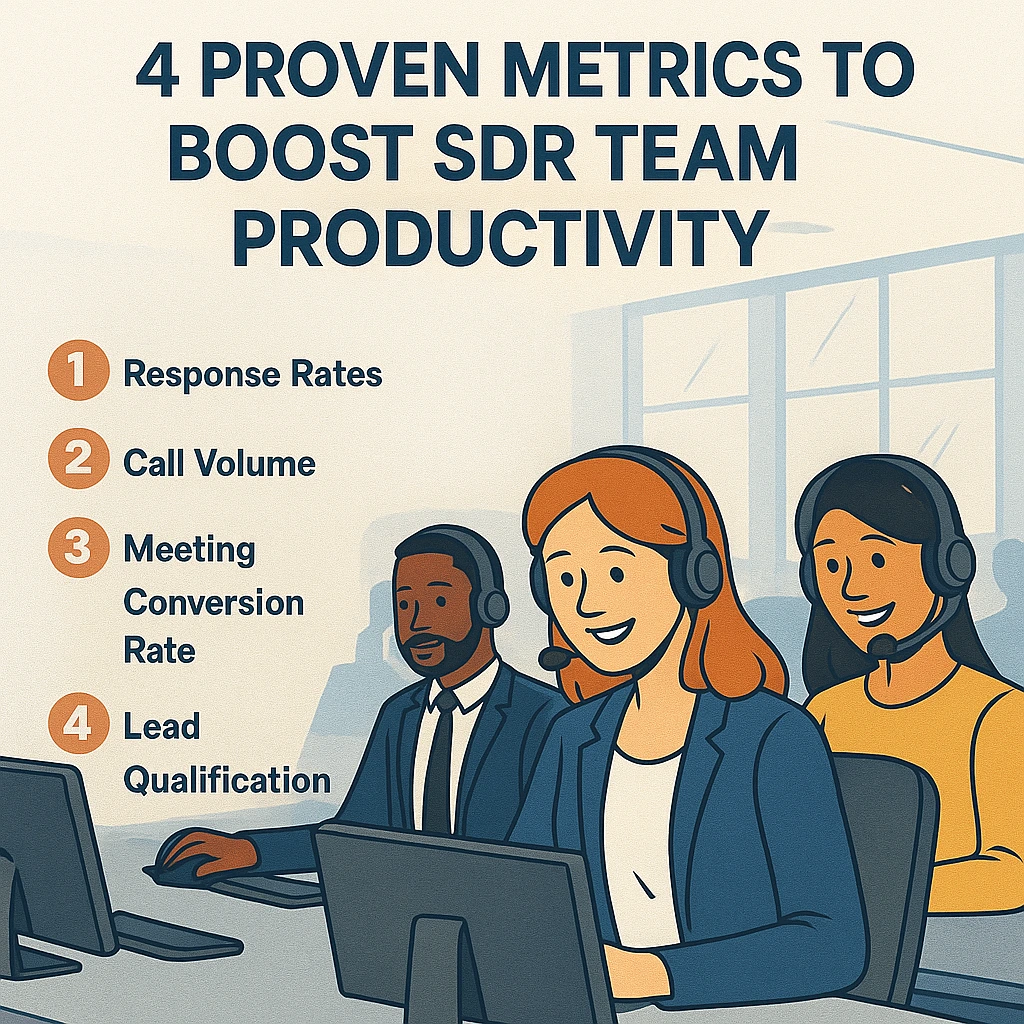
SDR performance metrics are the guiding compass of every high-performing sales development team. Not so long ago, with ever-increasing competition in B2B sales, data is no longer optional; it's the bedrock of growth. It usually comes down to what a team measures and then acts upon that makes the difference between an average SDR team and a top performer.
For companies that rely on Sales Development Representatives to fill the top of the pipeline, track engagement, and ultimately convert prospects into opportunities, understanding and optimizing these metrics can be the difference between missing or exceeding quota.
Why Tracking SDR Metrics is Critical to Team Success
Moving Beyond Activity to Measurable Outcomes
Most SDRs feel like they're busy: they're making the calls, sending the follow-up emails, and logging all the notes in the CRM. But the problem is, busyness does not always equate to business. Real success starts when teams move beyond vanity metrics and start focusing on tracking the outcomes that affect revenue.
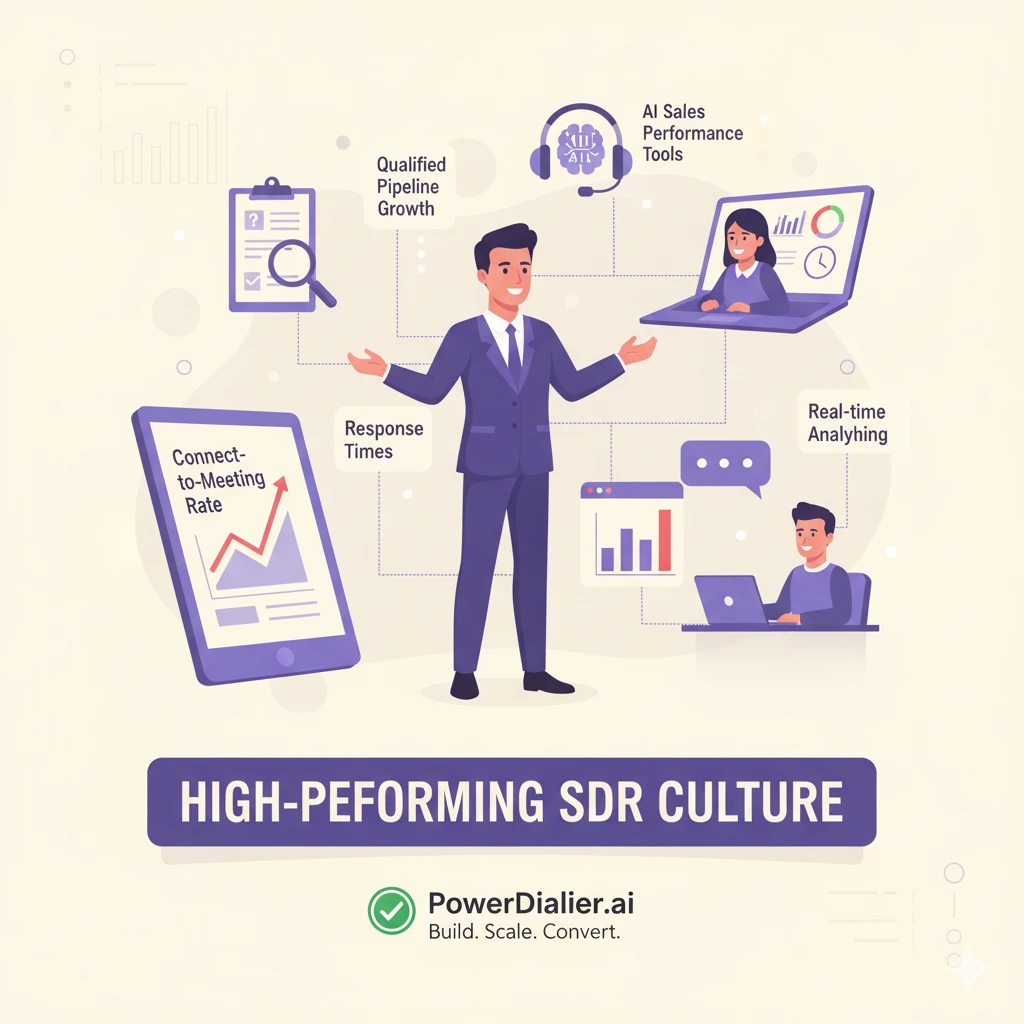
By zeroing in on key metrics for SDRs around things like connect-to-meeting rates, response time, and qualified pipeline created, leaders can define what actually drives progress. Instead of just tracking "how much" SDRs do, data helps teams understand "how well" they perform.
Moving from activity-based metrics to outcome-based metrics really helps SDRs focus on quality conversations that actually drive pipeline growth.
The Role of Data in SDR Performance Optimization
Data transforms sales management from being reactive to proactive: once sales performance is tracked properly, the sales leader does not have to rely on intuition; he or she makes decisions based on measured insights.
That's where AI for sales performance tools comes in. For example, PowerDialer.ai provides real-time analytics to show not only what the SDRs are doing but how well they are doing it. Managers gain visibility on the outcomes of calls, response times, and talk-to-listen ratios, which can then be used for data-driven sales coaching.
In other words, data makes sales coaching a science and not a guessing game.
The 4 Proven SDR Metrics That Drive Peak Performance
1. Connect-to-Meeting Conversion Rate
Why it matters
Every SDR knows the grind: dialing through hundreds of numbers daily. But the real measure of success is not in how many calls one makes, but how many of those calls actually convert into meetings. The connect-to-meeting conversion rate shows how efficiently reps are captivating prospects and pushing them down the funnel.
A good conversion rate shows that SDRs are building rapport, asking the right questions, and adding value in every interaction. Conversely, weak rates signal either a need for coaching or process improvement.
How to improve it using PowerDialer.ai's AI-powered insights
PowerDialer.ai listens to every call and, with AI sales performance tools, evaluates tone and pacing in real-time, detecting all missed opportunities. Managers and SDRs can work together to continually refine their scripts, handle objections more effectively, and ultimately close more meetings with data-backed insights.
By optimizing this single metric, teams can see huge leaps in the quality of the pipeline and their conversion rates.
2. Qualified Pipeline Created: SQLs and MQLs
Measuring pipeline health
A healthy, growing sales pipeline is one indication of a successful SDR team. Monitoring SQLs and MQLs will give you an idea of the quality and quantity of the prospects coming through your funnel.
In other words, when the sales development representatives develop a consistent flow of qualified leads, the sales team then can utilize their time in closing instead of chasing unfit prospects.
This directly reflects the effectiveness of prospecting, messaging, and targeting efforts.
Aligning SDRs to marketing for higher quality leads
True pipeline efficiency flows from alignment: Marketing feeds the SDRs with accurate and relevant information, while the SDRs feed back on quality of lead and challenges to convert.
Both sides have line-of-sight into sales development KPIs, ensuring everyone is working toward a common goal: pipeline growth that converts.
PowerDialer.ai is integrated into CRMs and marketing tools so that both teams have the same visibility of pipeline health and see what campaigns yield the best leads.
3. Average Response Time to Leads
The need for speed in outbound follow-ups
Everything is about timing in outbound sales. Timing can make or break a deal. In this regard, studies show that leads contacted within five minutes of engagement are 9x more likely to convert. That is why the monitoring of average response time is a must-have among SDR efficiency metrics.
Slow follow-ups translate into lost opportunities. Prospects expect fast responses especially when they are in an active buying cycle. Response time tracking ensures that SDRs don't let those warm leads go cold.
Automate responses with AI-driven dialers.
PowerDialer.ai automates follow-ups so SDRs never miss leads. With the intelligent sales engagement software, reps can respond with just the right message or call at precisely the right moment.
The result is faster engagement, higher connect rates, and better conversion outcomes. All that while freeing up SDRs to focus on meaningful conversations instead of manual tasks.
4. Talk-to-Listen Ratio and Call Quality Metrics
Balancing conversations for better engagement
The best SDRs intuitively know this is not about talking but about listening. The talk-to-listen ratio is a potent indicator of conversation quality.
A perfect ratio would be approximately 45:55, where the reps do a bit more listening than talking. In such a case, prospects would open up about most of their challenges and needs, thus making it easier to pitch effectively to them.
Using AI call analytics to coach SDRs in real-time
PowerDialer.ai takes call quality metrics to the next level: real-time performance analytics, automating call scoring, keyword highlighting, and detection of changes in tone.
This data provides sales leaders with a reason to coach SDRs based on facts rather than assumptions. Data-driven coaching ultimately builds confidence and empathy within teams, elevating closing rates.
How PowerDialer.ai Helps Track and Improve SDR Metrics
Real-time Monitoring and AI Sales Coaching
Sales leaders no longer have to wait until the end of the month for reports that diagnose performance issues with PowerDialer.ai. Its real-time monitoring dashboard gives instant visibility into calls, conversion rates, and engagement trends.
From one interface, managers can monitor calls in real-time, provide immediate feedback, or review analytics after a call for more detailed analysis.
Data-Driven Insights for Continuous Improvement
Where traditional dialers let you simply log activities, PowerDialer.ai turns each call into a learning exercise. It tracks behavior patterns, underlines the best performers, and determines what made their conversations successful.
This creates a feedback loop that feeds improvement continuously, and SDRs can adopt best practices more quickly.
Reduce Admin Work to Increase Selling Time
Manual note-taking and data entry decrease SDR productivity. PowerDialer.ai automates the repetition through syncing all interactions directly into the CRM.
It means that SDRs are investing more time in what is most important: relationship building and booking meetings.
Book a demo with PowerDialer.ai today and see how it can supercharge your team's productivity and performance tracking.
Building a Data-Driven SDR Culture
Encourage Coaching Based on Metrics, Not Gut Feel
- High-performing teams are not driven by intuition but rather by insight. Using metrics around SDR performance as the foundation for feedback means that coaching is accurate and fair. SDRs appreciate knowing exactly where they stand and exactly how they can improve.
Reward consistency and process adherence
- It is always easy to reward the best performers, but recognizing consistent performers who follow processes in place is equally important-they are the backbone of a scalable sales team. Metrics-driven recognition keeps morale high and performance steady.
Integrate tools that support SDR focus:
- A cluttered tech stack kills focus. Pare down to the sales enablement tools that simplify, not complicate. PowerDialer.ai brings dialing, analytics, and coaching to one place; you keep SDRs productive and data centralized.
Conclusion
The future of sales will belong to the teams embracing data. Tracking SDR performance metrics isn't about measuring output; rather, it is about empowering your reps to work smarter, sell faster, and perform better. Paired with the right metrics, SDRs get clarity, confidence, and control of their success with tools like PowerDialer.ai. Empower your SDR team with the right metrics, the right tools, and the right coaching, and watch performance soar. Book a demo with PowerDialer.ai today and see how data can turn every call into an opportunity.
FAQs
Q1: What are the most important SDR performance metrics?
A1: The most important metrics would include connect-to-meeting rate, qualified pipeline created, average response time, and call quality indicators like talk-to-listen ratio.
Q2: How can PowerDialer.ai help improve SDR performance?
A2: PowerDialer.ai provides AI-driven insights, real-time call monitoring, and automated coaching that enables SDRs to improve conversations and close more meetings.
Q3: How frequently should SDR metrics be reviewed?
A3: Weekly performance reviews should work. Problems are detected much sooner, strategy adjustments are faster, and there is a constant drive toward goals.
Q4: What's a good talk-to-listen ratio for SDRs?
A4: The 45:55 talk-to-listen balance ensures SDRs listen more than they speak to create rapport and understand the needs of the prospect better.
Q5: Can AI replace human sales coaching?
A5: No, because AI enhances human coaching with data that is accurate and unbiased. The manager's role remains the most important in motivating and guiding each team.