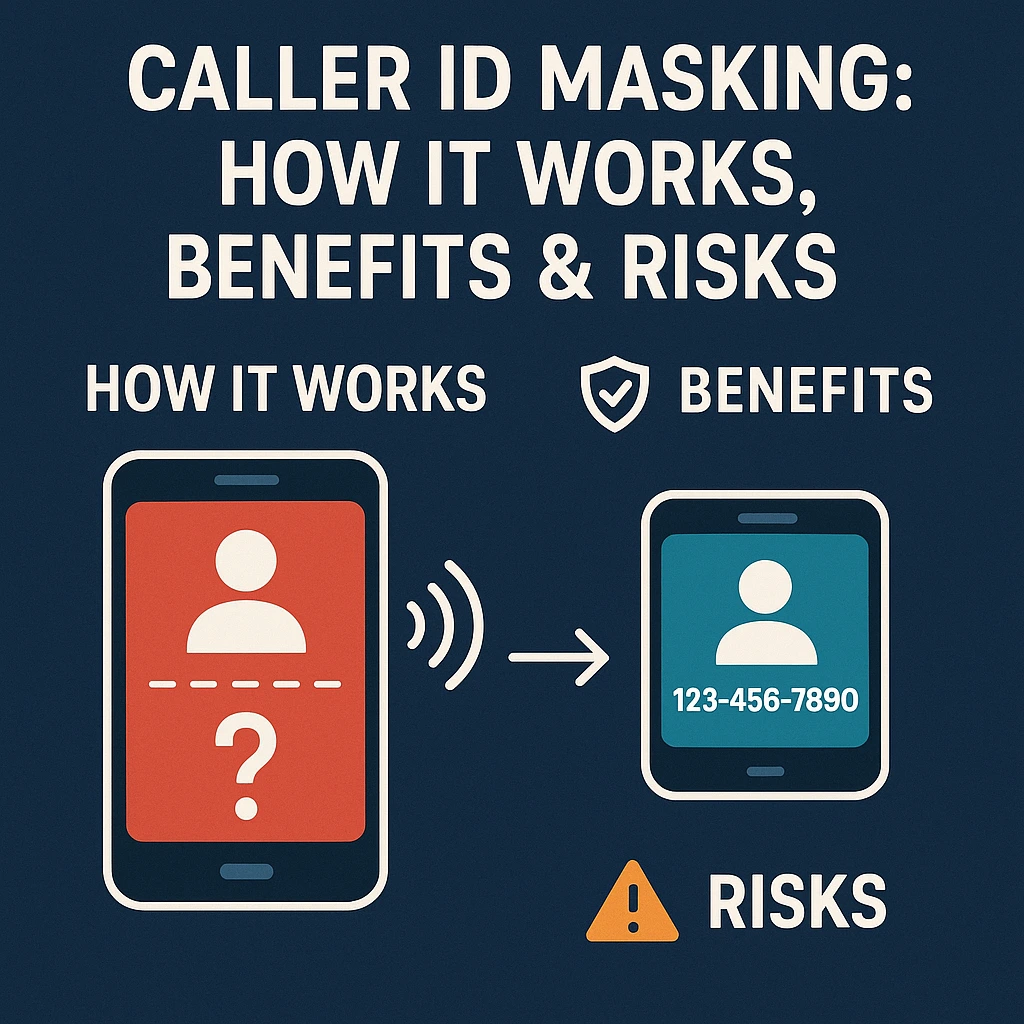
In today's hyper-connected world, businesses handle thousands of calls every day-from customer inquiries to delivery confirmations and telehealth consultations. Though phone communication helps build trust with customers, it gives rise to crucial privacy concerns. Can you imagine a delivery driver calling dozens of customers on his personal number or a doctor making a call directly from his mobile to patients? That is not only inconvenient but also highly risky.
This is where Caller ID Masking steps in as a privacy shield. It lets companies show a business-approved number instead of the caller's actual number, enabling safety, professionalism, and compliance.
In this post, we are going to discuss what caller ID masking is, how it works, its benefits, any legal implications, best practices, and how you can safely implement it for your business.
What is Caller ID Masking?
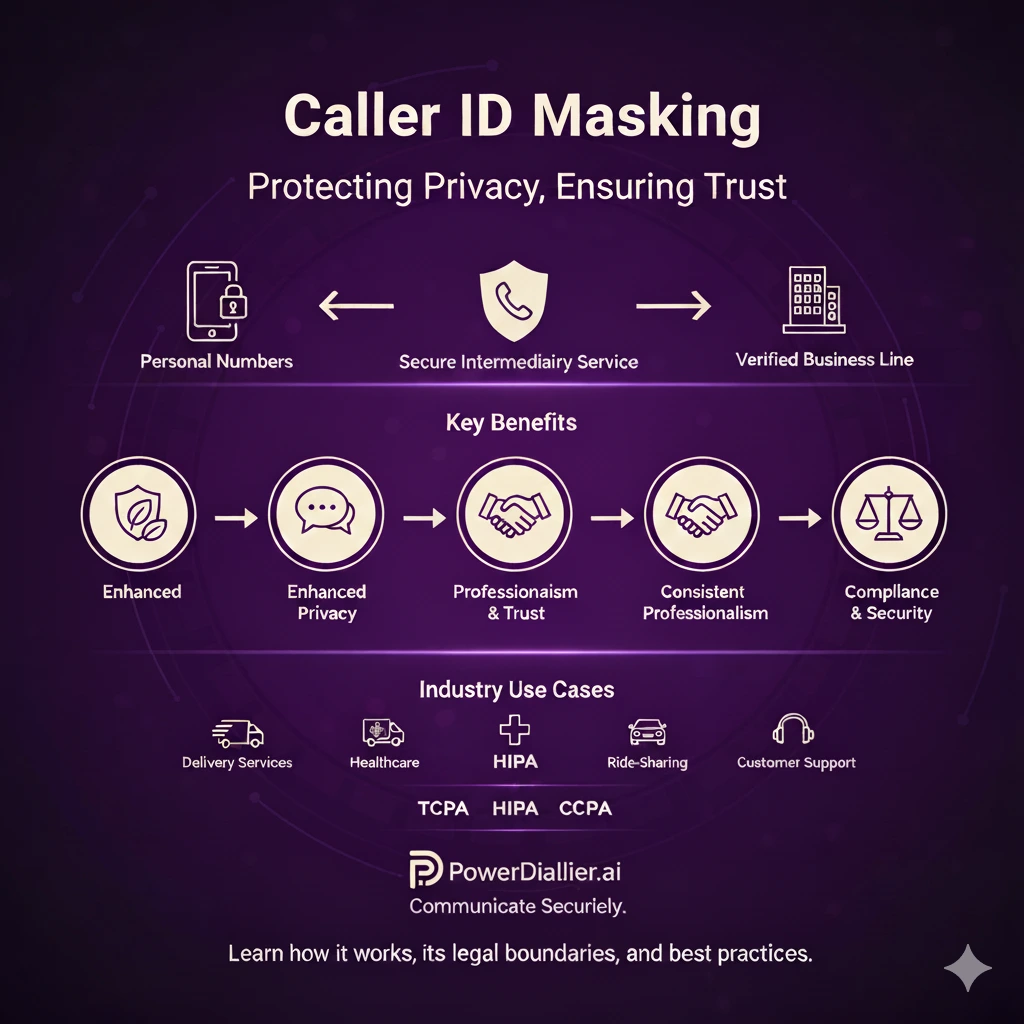
Caller ID Masking is a technology in telecommunications that masks the real phone number of the caller and represents a different number, usually some verified business or virtual number, on the receiving device. In this way, it protects personal information while enabling two-way communication.
For example, when your delivery agent calls a customer to confirm an address, the customer doesn't see the driver's personal number but instead your company's registered number or a temporary number managed by your telephony provider.
This feature becomes essential for companies dealing with customer data or teams that operate remotely, wherein no private number is exposed.
Real-World Examples of Caller ID Masking
- Amazon Delivery: Customers and drivers communicate via masked numbers to protect both sides' privacy.
- Hospitals: Physicians use lines approved by the hospitals to reach out to patients in a secure manner.
- Ride-sharing applications (such as Uber): Riders and drivers converse through virtual numbers, which expire once the ride ends.
- Customer Support Teams: Agents will be consistent in their business numbers.
In other words, caller ID masking helps businesses keep their professionalism, security, and trust intact with each call they make.
How Caller ID Masking Works
Caller ID masking works through a system of cloud telephony or VoIP, which basically stands for Voice over Internet Protocol. These platforms act as an intermediary between the caller and the receiver, ensuring the real number is never revealed.
Here's a breakdown in steps:
Call Origination:
The employee, agent, or system initiates calls through a telephony platform or via a dialer integrated with CRM.
Routing through the Provider:
The call request is routed through a telephony API provider, for instance, via Twilio, PowerDialer.ai, or Exotel.
Number Replacement:
The system replaces the caller's real number with a pre-configured masked number authorized by the business.
Call Delivery:
In this case, the recipient's phone shows a masked number instead of the actual one.
Logging and Analytics:
Every call is logged, tracked, and monitored via the system dashboard for reporting and compliance.
Caller ID Masking vs. Caller ID Spoofing
It is worth mentioning here that masking and spoofing are two different concepts.
| Feature | Caller ID Masking | Caller ID Spoofing |
|---|---|---|
| Purpose | Protect privacy and brand consistency | Deceive or mislead the recipient |
| Legality | Legal and ethical | Illegal and punishable by law |
| Control | Managed by verified telecom systems | Often done via unauthorized methods |
| Use Case | Business communication, privacy | Scams, fraud, impersonation |
Caller ID Masking is a valid and legitimate business practice. Spoofing, however, is a deceptive behavior and has been usually utilized for scams, for example, showing a fake “bank” number in order to trick someone.
Why Businesses Use Caller ID Masking
Masking caller ID isn't just a technology upgrade; it's actually a trust-building tool. Let's understand why companies the world over are embracing this feature.
1. Privacy Protection
The biggest advantage is that of privacy. Masking ensures that no personal number, of customers, agents, and vendors alike, has ever been exposed. Misuse of contact information and sensitive relationships is thus avoided.
2. Professional Branding
When customers see a consistent and recognizable business number, they're more likely to pick up the call. Random or unfamiliar numbers often look suspicious, and that reduces answer rates.
A branded caller ID reinforces your company’s identity and enhances its credibility.
3. Seamless Customer Communication
With unified caller ID, every customer interaction feels connected to the same brand, be it a call from sales, delivery, or customer support.
4. Better Call Management and Tracking
Masking systems allow for centralized tracking of all incoming and outgoing calls, and analytics related to duration, call volume, and performance metrics can be accessed by managers without revealing any personal details.
5. Legal and Data Compliance
Businesses operating internationally need to abide by the privacy laws of different regions: GDPR (EU), TCPA (US), and CCPA all require caller ID masking to simplify compliance by limiting data exposure.
Legal and Ethical Considerations
Caller ID masking is absolutely legal when utilized in an ethical manner, but misuse may attract grave legal consequences.
1. Legality
Masking is legal across most countries when done for business privacy or operational efficiency. Problems arise only when the intent becomes deceptive, such as impersonating another entity or concealing identity to commit fraud.
2. Regulatory Frameworks
Key regulations around masking and privacy include the following:
FCC: Federal Communications Commission, USA: Regulates the Truth in Caller ID Act to prevent fraud.
TCPA: The Telephone Consumer Protection Act requires consent to perform marketing or promotional calls.
GDPR (Europe): It protects the personal data of users and calls for the lawful handling of communication.
CCPA of California: It provides consumers with control over their personal information.
Non-compliance can result in heavy fines and loss of brand reputation.
3. Ethical Boundaries
Even though caller ID masking is technically legal, businesses must ensure that it’s done transparently. Customers need to know who’s calling and why. Hiding your brand identity, even inadvertently, can erode trust.
4. When Masking Becomes a Risk
- Impersonation of others using it
- Making marketing calls without consent
- Hiding the origin of large-volume cold calling
The golden rule is simple: use masking to protect privacy, not to hide accountability.
Best Practices for Responsible Caller ID Masking
The following best practices ensure smooth and compliant communication:
1. Obtain Customer Consent
Obtaining express consent before calling customers, especially in cases involving marketing or surveys, facilitates customers' adherence to privacy laws and makes the process credible.
2. Show Significant Figures
Avoid random or misleading numbers. Use an identifiable number associated with your business or brand.
3. Choose a Reputable Provider
Partner with a secure telephony platform that offers features like encrypted routing, compliance reports, and call tracking. Examples include PowerDialer.ai, Twilio, or Exotel.
4. Audit Regularly
Periodically review call logs, call recordings, and usage reports for misuse or unauthorized activities.
5. Educate Your Team
Train employees in the proper practice of communication, data privacy, and how to maintain professionalism in masked calls.
6. Integrate with Secure Call Recording
If your business records calls for training or quality control, make sure to comply with call recording consent laws in your region.
Common Risks and Challenges
While caller ID masking provides privacy and professionalism, it introduces a number of challenges if not done appropriately.
1. Technical Failures
Occasionally, network or configuration errors can expose real numbers. Regular maintenance and monitoring usually help avoid this.
2. Employee Misuse
If employees use such masked systems for personal or unauthorized calls, it risks causing reputational or legal damage.
3. Regional Restrictions
Some countries or states have different regulations concerning telecommunication. Always check local regulations before deploying masking features.
4. Customer Confusion
If the masked number is unfamiliar to them, they may well screen or block the call. To avoid this, utilize consistent branding or an automated greeting to introduce your business.
Caller ID Masking Across Different Industries
1. E-Commerce and Logistics
Masked numbers are used by the delivery agents to coordinate with customers safely. Once the delivery is effected, the number connection expires-ensuring complete privacy.
2. Healthcare and Telemedicine
Masked calls are utilized by doctors, nurses, and healthcare administrators to protect patient confidentiality while remaining accessible.
3. Customer Support & Call Centers
The primary beneficiaries of Caller ID masking are call centers and BPOs. It standardizes outgoing calls, tracks agent performance, and maintains a professional image.
4. Real Estate and Financial Services
Masking allows agents and advisors to keep their personal and professional communications separate, protecting sensitive information.
5. Ride-Sharing and Gig Economy
The systems like Uber apply dynamic masking, which allows communication during active bookings without compromising the privacy of either party.
Choosing the Right Caller ID Masking Solution
Key features to consider when choosing a masking solution:
- Regulatory Compliance: Must support FCC, GDPR, and TCPA compliance.
- Dynamic number management: the ability to automatically assign and recycle virtual numbers.
- Real-time analytics include call tracking, performance monitoring, and analysis of communication data.
- CRM integration: Easily integrate with Hubspot, Zoho, or Salesforce.
- Two-Way Calling: Allow customers to safely call back masked numbers.
- High Reliability: Go for those providers that guarantee uptime and security in their infrastructure.
Top Recommendation:
PowerDialer.ai is an advanced AI-driven platform that bundles in one interface all that a business needs for caller ID masking, call routing, analytics, and regulatory compliance. Companies use it to ensure every outbound call reflects professionalism and privacy while staying compliant across regions.
The Future of Caller ID Masking
As communication continues to evolve, so does caller ID masking with AI and automation. Future developments could involve:
- Smart Number Selection: automatically selects local numbers for better pickup rates.
- Sentiment Analysis: Extracting customer's mood while on calls to improve service quality.
- Voice Authentication: Verification of users through biometric voice patterns.
- Dynamic Compliance Engines: Automatic adjustment of masking rules according to regional regulations.
These technologies will make business communication smarter, safer, and more adaptive.
Conclusion
Caller ID masking is much more than a feature; it is a cornerstone of secure and ethical enterprise business communication. It protects sensitive information, enhances brand image, helps organizations stay compliant, and increases customer trust. But businesses must use it responsibly-always with due transparency, consent, and proper regulation. Otherwise, misuse may result in penalties or lost trust. By adopting the right tools and best practices, you can make every customer interaction private, professional, and compliant-exactly how modern communication should be.
Want to maintain privacy, enhance call performance, and stay fully compliant with telecom laws? Try PowerDialer.ai: the AI-driven platform for secure caller ID masking, automated compliance, and real-time analytics. Protect your brand and customer relationships-one call at a time.
FAQs
1. Is Caller ID Masking Legal?
Yes, it is legal if used to protect privacy or maintain brand identity. It is only illegal when it is used to deceive or impersonate others.
2. Can Customers Call Back a Masked Number?
Yes, provided the system supports two-way communication using virtual numbers.
3. Is Caller ID Masking the Same as Spoofing?
No. Masking is ethical and authorized; spoofing is fraudulent and punishable by law.
4. Does Caller ID Masking Affect Call Quality?
Not at all. The modern telephone platforms will ensure that calls are of high quality even if the masking feature has been enabled.
5. Which Businesses Benefit the Most?
E-commerce, logistics, healthcare, finance, and customer service are the leading beneficiaries because they interact with their customers very frequently.